


I have been a fan of hip hop since my teenage years, and I still retain a love for The Roots, A Tribe Called Quest, J Dilla, Madlib, MF Doom, and others from the indie rap era of the 1990s and 2000s that betray my age. A few years ago I even convinced my wife and some friends to go on a hip hop bus tour in New York, where I was volunteered to dress up like Flavor Flav (read on for the photo, you’re welcome). So it seems fitting to kick of this Substack with a story about the origins of hip hop. Come for the music history, stay for the theoretical biology...
The Bronx, New York, 1973
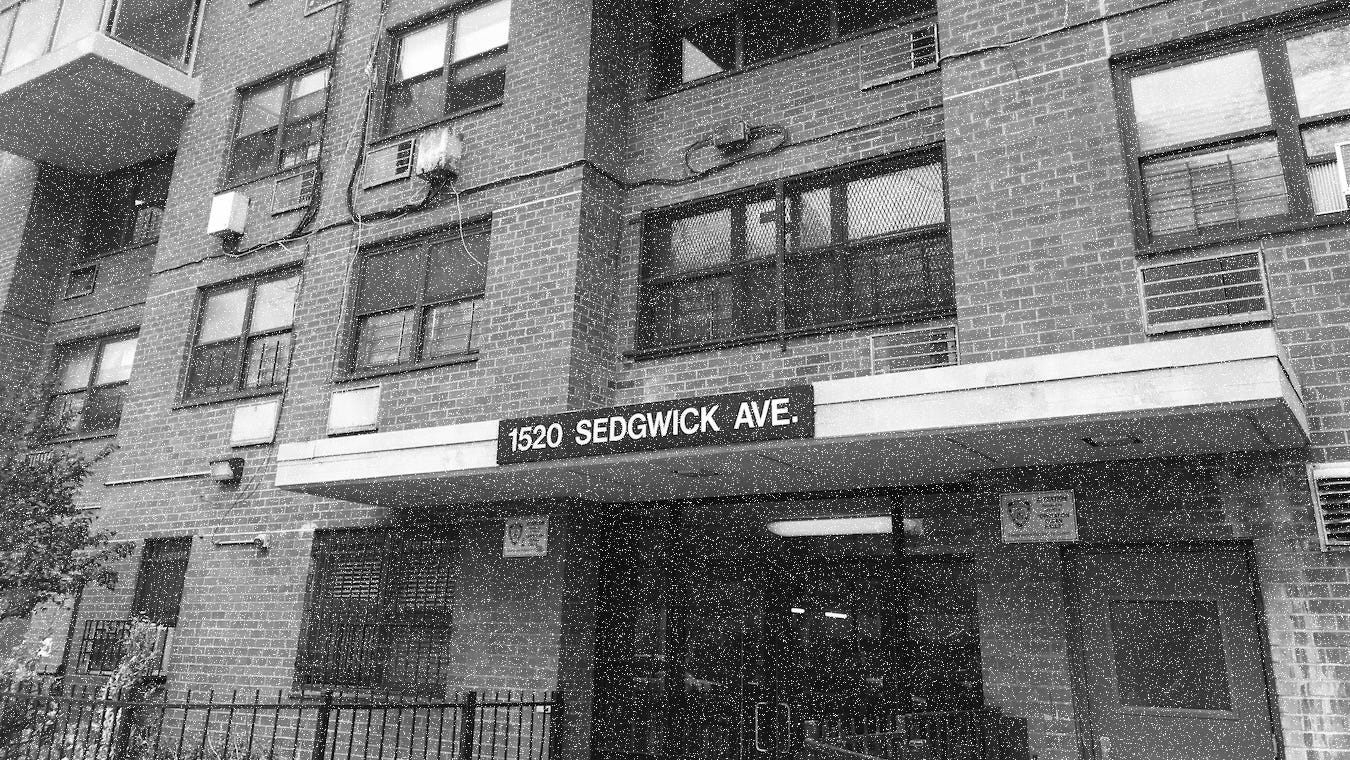
Legend has it that the very first hip hop party took place on 11 August 1973 in the Bronx, New York, with DJ Kool Herc on the turntables. Herc’s real name was Clive Campbell and he grew up in Kingston, Jamaica, where he got into music through sound system culture and hanging around neighbourhood dance hall parties. Aged 13, Campbell emigrated with his family to New York, where they moved into an apartment at 1520 Sedgwick Avenue, the Bronx.
Campbell got the nickname “Hercules” while playing basketball, which evolved into “Kool Herc” when he joined a graffiti crew, and “DJ Kool Herc” when he got his own sound system and started playing funk records at parties organised by his sister, Cindy. When he played, the best dancers would wait for the breaks, going wild during the percussion-led interludes. Wanting to please the “breakers” and keep the energy levels high, Herc began tinkering with new mixing techniques.
In summer 1973 Cindy organised a back to school party in their apartment block’s recreation room. It was here that Herc debuted his “merry-go-round” technique, getting two copies of the same record, and playing the same break on both records back-to-back. With Coke La Roc joining Herc as the party MC, rhyming shout-outs to the crowd in a rhythmic style that borrowed from dancehall MCs and entertainers like Pigmeat Markham, hip hop was born.
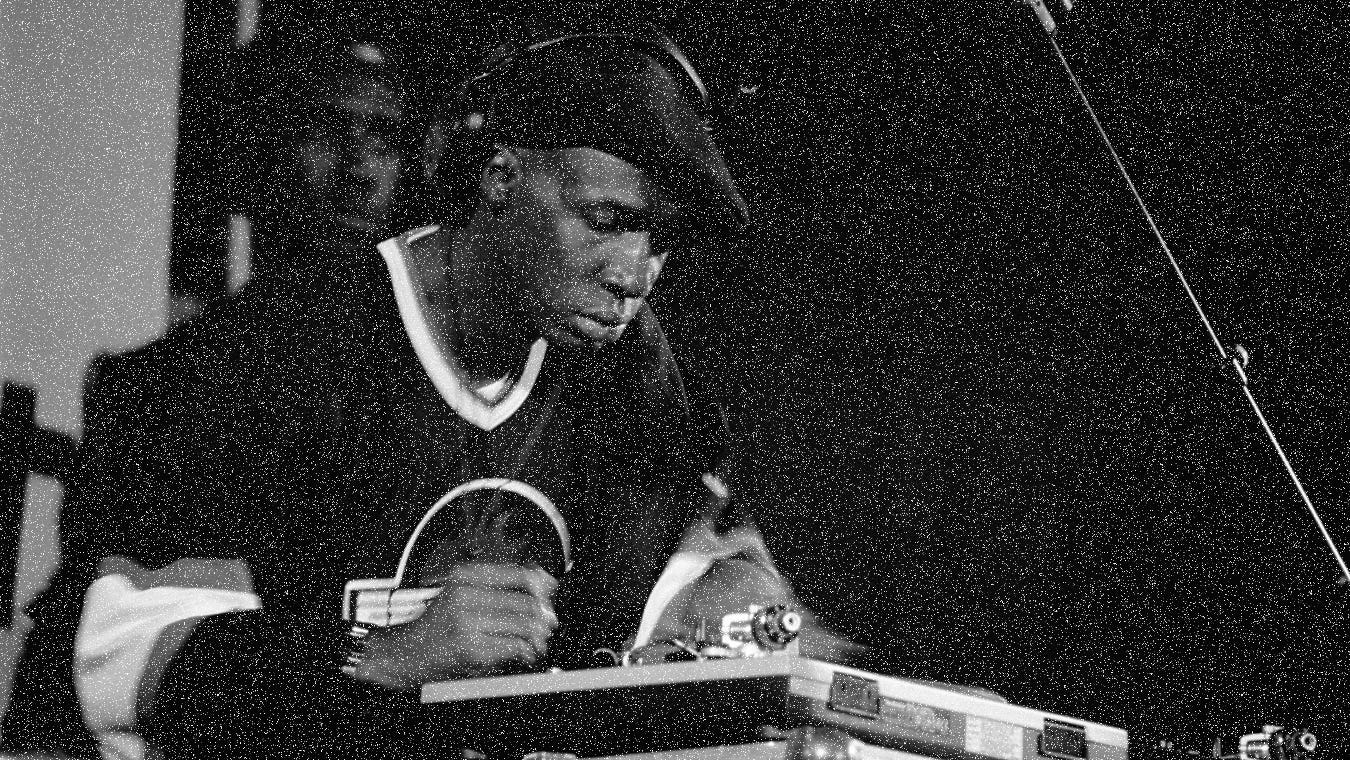
Grandmaster Flash, another aspiring local DJ, took what Herc started and perfected it. A self-confessed geek with a passion for electronics, Flash was always tinkering with audio equipment. He also experimented with turntable techniques. While Herc could extend a break, transitions were often jarring because the needle had to be dropped at precisely the right moment. One day, frustrated, Flash placed his fingers on the vinyl and stopped it. Then released it. And stopped it again. He realised then that he could manipulate the vinyl directly.
Flash’s next breakthrough was to solve a mechanical friction problem between the vinyl and the turntable. Whenever he held the record, the rubber mat underneath would grip the steel platter and stop the motor. Removing the mat entirely would ruin the record. Flash’s mother was a seamstress so he knew about materials and realised that a felt mat could be the solution. He cut some felt to the right size, sprayed it with his mother’s starch, and ironed it until it became stiff. Flash called his new invention a “wafer”. Today, it’s called a slipmat.
Still, the setup wasn’t perfect. Flash tested dozens of styluses to find one that would stay inside the groove as the record was manipulated. Next, he needed a turntable with a high level of torque so that it would engage immediately after the vinyl was released. He tested anything he could find that might do the job, even a Fisher Price toy model. Eventually, he came across a Technics turntable at a local store, powered it up, and found his answer. That model was a predecessor to the now-legendary Technics SL-1200s.
Flash was finally able to take a break that lasted only 10-15 seconds and loop it back and forth seamlessly, extending it to minutes. This was more than a technical achievement. Flash broke the established norms of DJ culture. As he describes it, “The taboo thing was that you’re not really supposed to touch the middle of the vinyl. DJs are gonna hate you.” Building on what Herc started, Flash broke with tradition to redefine the record deck, from a consumer good designed for playback, into a musical instrument in its own right.
Revolution, one step at a time
In 1996, the same year The Fugees released “The Score” and Jay Z released “Reasonable Doubt”, Stuart Kauffman released “Investigations: The Nature of Autonomous Agents and the Worlds They Mutually Create”, a landmark working paper for the Santa Fe Institute. It was in this paper that Kauffman coined the term “adjacent possible”, from which this Substack takes its name. Kauffman’s “humble insight”, as Roger Koppl and colleagues put it, is that “evolution happens one step at a time.”
The origins of hip hop is the story of a musical revolution that occurred through many incremental innovations that coalesced into a broader pattern, with little foresight as to what the future of youth culture might look like. Herc and Flash were simply exploring new possibilities and responding to what was right in front of them—a process that scientists increasingly argue is a direct cultural extension of biological evolution. Evolution happens one step at a time, and revolutions happen when those steps occur in relatively quick succession.
The theory of the adjacent possible recognises that novel forms very rarely, if ever, come in to being ex nihilo (from nothing). In biological evolution, sexual reproduction acts as a combinatorial engine, shuffling pre-existing genetic structures, with the odd mutation adding further novel code. Indeed, the evolutionary origins of sex are explained by its ability to combine advantageous mutations from different lineages faster than asexual reproduction could achieve alone, while also providing a way to get rid of harmful mutations.
When existing elements stay in their familiar roles, mixing them together produces predictable results. By contrast, radical novelty emerges when configurations are thrust into a new context, causing them to perform entirely unexpected functions. Paleontologists Stephen Jay Gould and Elizabeth Vrba call this repurposing “exaptation”. A classic example from nature, provided by Kauffman, is the swim bladder found in most bony fish, which began as a primitive lung before shifting function along some evolutionary pathways to enable buoyancy control.
The concept of the adjacent possible was introduced to a broader audience by the writer Steven Johnson, who describes it as “a kind of shadow future, hovering on the edges of the present state of things, a map of all the ways in which the present can reinvent itself.” Johnson uses the metaphor of a house in which each time you open a door and step into a new room, new doors are revealed that lead to rooms that did not exist before. Through both combination and exaptation, biological and cultural systems unlock new doors within the adjacent possible.
Introducing homo tinkerus
“Hip hop comes from everything. Hip hop is funk and rock and soul and jazz. It’s gospel and toasts and nursery rhymes…Hip hop is also politics and technology...But more importantly, it’s all these things put together.”
- Shad Kabango., rapper and broadcaster
The emergence of hip hop in the 1970s created a novel cultural niche, bringing together DJs, MCs, breakers, and graffiti artists. Yet none of these elements were brand new. All had precedents, or multiple precedents, often with their own long prior histories. In the early 1970s hip hop was an adjacent possible, ready to be realised by the cultural innovators of the Bronx. It wasn’t bound to happen, but all the pieces were in place to make it possible.
In those formative few years, numerous novel combinations and exaptations came to be. The first party combined rhythmic talking with a new DJ technique developed to meet the latent needs of the breakers. As Murray Forman and Mark Neal write, the breakers were themselves blending kung-fu moves and the footwork of James Brown into a new form of dance. James Brown, in turn, was building on a long tradition of Afro-American dances, including the Lindy and the Charleston, as well as dances from the Caribbean and South America.
Flash took Herc’s innovations further, combining a new technique to manipulate records with a modified sound system, including high-torque turntables and a spherical stylus. He invented the slipmat to solve a mechanical friction problem, finding a new use for starch-stiffened felt. Both Herc and Flash ultimately co-opted the record deck to turn it from a passive playback device into a live instrument, opening the door for further innovations in turntable design.
In “The Origin of Wealth”, Eric Beinhocker argues that the history of human innovation is a history of tinkering. In “Antifragile”, Nassim Nicholas Taleb uses the term “antifragile tinkering” to describe such practices with low-cost mistakes and large potential gains. Tinkering is also equated with the French word bricolage, introduced by Claude Lévi-Strauss to describe the practice of making do with “whatever is at hand”. For Lévi-Strauss, the bricoleur is a creative problem-solver who adapts readily-available materials to meet immediate needs.
However, biologist Roberto Cazzolla Gatti and colleagues argue that explorative tinkering goes beyond Lévi-Strauss’s characterisation of bricolage. Bricolage, in its original usage, does not necessarily imply a drive towards novelty. It may suggest only the reuse of local tools and materials to carry out a task that might otherwise have required brought-in resources. But open-ended tinkering also occurs in highly-specialised fields where trial-and-error requires deep experience of the domain and the possible ways in which things can be combined.
There is a line of argument that cultural change and economic development owe less to academic theorising than is often assumed, and more to tinkering. Taleb accuses academics of “lecturing birds how to fly” by merely explaining how things work in retrospect, after they have been brought forth into the world by the blind tinkering of biological evolution or human acts of creativity, ingenuity, and intelligent search. As Cazzola Gatti and colleagues put it, “If progress comes from tinkering, not thinkering, then we may justly speak of ‘Homo tinkerus’.”

Sources
Beinhocker, E.D. (2007) The Origin of Wealth: Evolution, Complexity, and the Radical Remaking of Economics. London: Random House Business. Available at: https://www.penguin.co.uk/books/367805/the-origin-of-wealth-by-beinhocker-eric/9780712676618.
Butler, B. (2016) ‘Grandmaster Flash on “The Get Down” and how he used science to pioneer DJ techniques’, The Washington Post, 23 August. Available at: https://www.washingtonpost.com/news/arts-and-entertainment/wp/2016/08/23/grandmaster-flash-on-the-get-down-and-how-he-used-science-to-pioneer-dj-techniques.
Cazzolla Gatti, R. et al. (2020) ‘On the emergence of ecological and economic niches’, Journal of Bioeconomics, 22(2), pp. 99–127. Available at: https://doi.org/10.1007/s10818-020-09295-4.
Forman, M. and Neal, M.A. (eds) (2004) That’s the Joint! The Hip-Hop Studies Reader. New York, NY: Routledge. Available at: https://www.routledge.com/Thats-the-Joint-The-Hip-Hop-Studies-Reader/Forman-Neal-Bradley/p/book/9781032403557.
Gould, S.J. and Vrba, E.S. (1982) ‘Exaptation—a Missing Term in the Science of Form’, Paleobiology, 8(1), pp. 4–15. Available at: https://doi.org/10.1017/S0094837300004310.
Johnson, S. (2010) Where Good Ideas Come From: The Natural History of Innovation. London: Penguin Books. Available at: https://www.penguin.co.uk/books/56300/where-good-ideas-come-from-by-johnson-steven/9780141964591.
Kabango, S. (2020) Hip Hop Evolution. Netflix. Available at: https://www.netflix.com/gb/title/80141782.
Kauffman, S.A. (2019) A World Beyond Physics: The Emergence and Evolution of Life. Oxford, UK: Oxford University Press. Available at: https://global.oup.com/academic/product/a-world-beyond-physics-9780190871338.
Koppl, R. (2025) ‘Of thoughts and things: how a new model of evolution explains the coevolution of culture and technology’, Review of Evolutionary Political Economy, 6(1), pp. 215–238. Available at: https://doi.org/10.1007/s43253-024-00141-1.
Laurence, R. (2023) ‘Hip-hop 50: The party that started hip-hop’, BBC Culture, 11 August. Available at: https://www.bbc.com/culture/article/20130809-the-party-where-hip-hop-was-born.
Levi-Strauss, C. (1962) The Savage Mind. London, UK: Weidenfeld & Nicolson. Available at: https://monoskop.org/images/9/91/Levi-Strauss_Claude_The_Savage_Mind.pdf.
Taleb, N.N. (2012) Antifragile: Things That Gain From Disorder. New York: Penguin Random House. Available at: https://www.penguinrandomhouse.com/books/176227/antifragile-by-nassim-nicholas-taleb/.
Whiten, A. et al. (2017) ‘The extension of biology through culture’, Proceedings of the National Academy of Sciences, 114(30), pp. 7775–7781. Available at: https://doi.org/10.1073/pnas.1707630114.